

Lacto-Fermented Pickles (No Vinegar, Just Salt Brine) for Gut Health
These lacto-fermented pickles are made with just three things: cucumbers, salt, and water. No vinegar, no canning, and no special skills. The salt brine does the work, turning crisp cucumbers into tangy, crunchy pickles full of live probiotics for your gut.
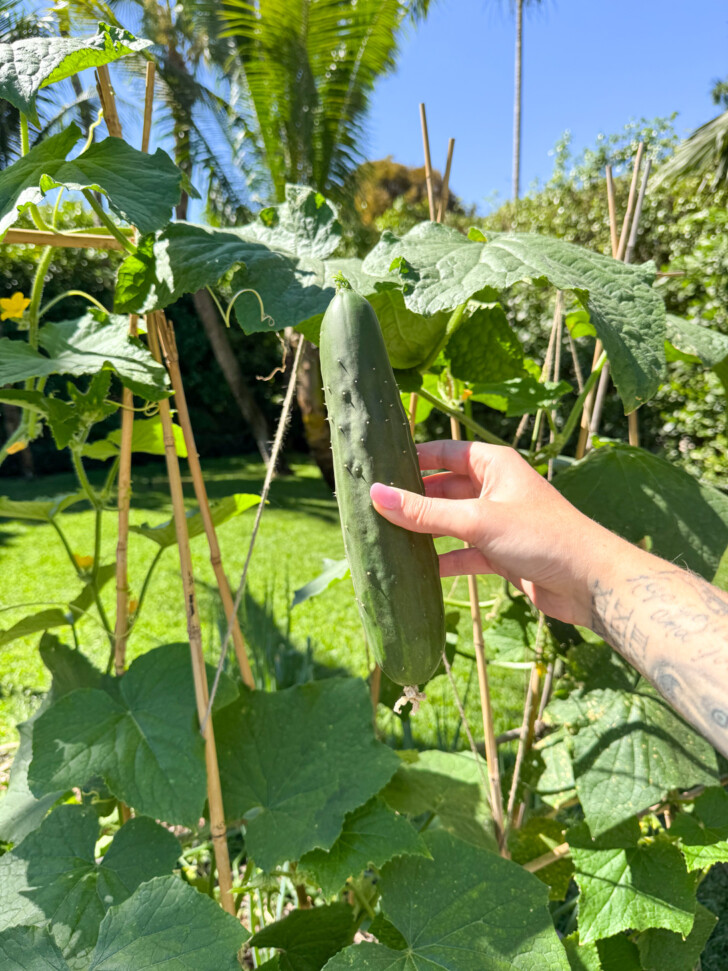
This is a small-batch recipe made for beginners. One cucumber fills one 32 oz jar, so you can try fermentation without committing to a whole crock. I grow cucumbers in my backyard and am left with dozens of cucumbers I don’t know what to do with – the BEST solution is fermenting them! They last up to a year and have so many incredible health benefits.
Below you’ll find the exact salt ratio in grams, how to keep your pickles crunchy, how to tell if the ferment is working, and what to do if something looks off.
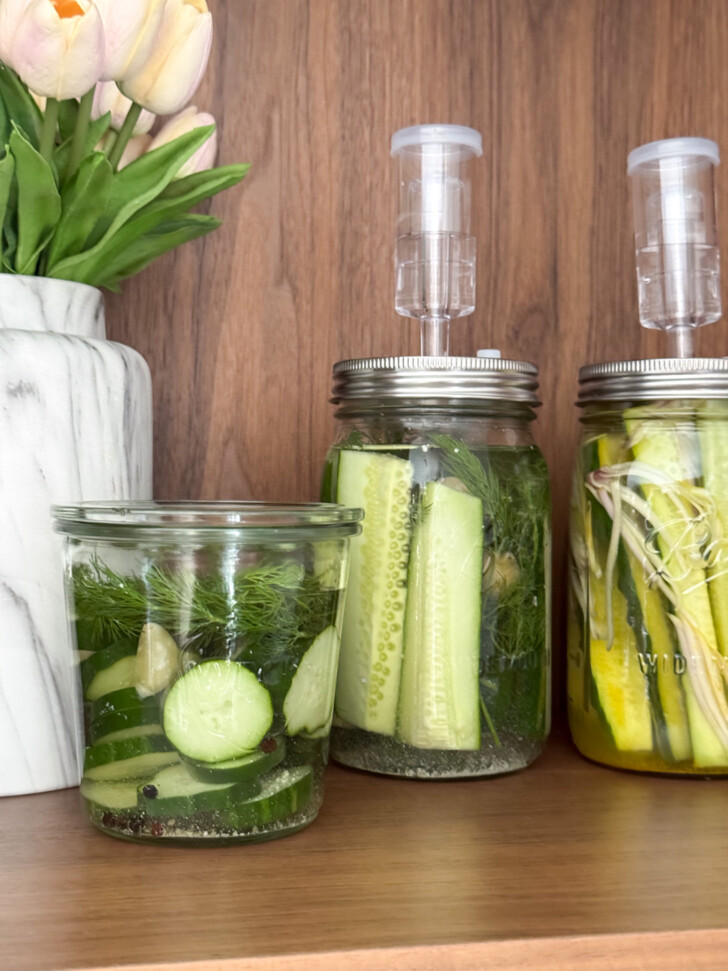
How to Make Fermented Pickles:
Are Pickles Good for Gut Health?
Fermented pickles are good for your gut. Vinegar pickles mostly aren’t. The difference is live bacteria.
When cucumbers sit in salt brine, naturally occurring lactic acid bacteria (mostly Lactobacillus) eat the sugars in the cucumber. They produce lactic acid, which gives pickles their tang and preserves them. Those bacteria stay alive in the jar, so every bite and every sip of brine carries them.
In a 10-week Stanford study, healthy adults who ate more fermented foods, including fermented vegetables and vegetable brine drinks, had more diverse gut bacteria and lower markers of inflammation. 70% of the immune system is in our gut, so a healthy gut means a stronger immune system, which means getting sick less frequently!
Here’s why fermented pickles are worth making:
- Live probiotics. Lactic acid bacteria that support a healthy gut microbiome.
- No vinegar or preservatives. The salt brine and lactic acid preserve them naturally.
- Low calorie. A crunchy snack with almost no calories.
- Easy and cheap. Cucumbers, salt, water, and a jar.
Is Pickle Juice Good for You?
The brine from fermented pickles is the good stuff. It holds the same live lactic acid bacteria as the pickles, plus electrolytes like sodium and potassium. That’s why many people drink it as a small probiotic “shot.” Pickle juice from regular vinegar pickles still has electrolytes, but no live cultures.
The main thing to keep in mind is sodium. A small splash is plenty. If you’re on a low-sodium diet, check with your doctor before making it a habit.
Ways to use leftover brine:
- Drink a small shot straight or diluted with water.
- Start your next batch. A few tablespoons of old brine kick-starts a new jar.
- Use it in place of vinegar in salad dressings, potato salad, or slaw.
Are Store-Bought Pickles Fermented?
Most store-bought pickles are NOT fermented. The pickles on the regular grocery shelf are usually made with vinegar and are heat-treated (pasteurized) so they’re shelf stable. That process gives them a sour taste, but it also means there are NO live probiotics in the jar.
True fermented pickles do exist in stores. Here’s how to spot them:
- Check the refrigerated section. Live-culture pickles need to stay cold, so they won’t be on the shelf with the regular pickles.
- Read the label. Look for “naturally fermented,” “live cultures,” or “raw.”
- Read the ingredients. If vinegar is listed, they aren’t fermented pickles.
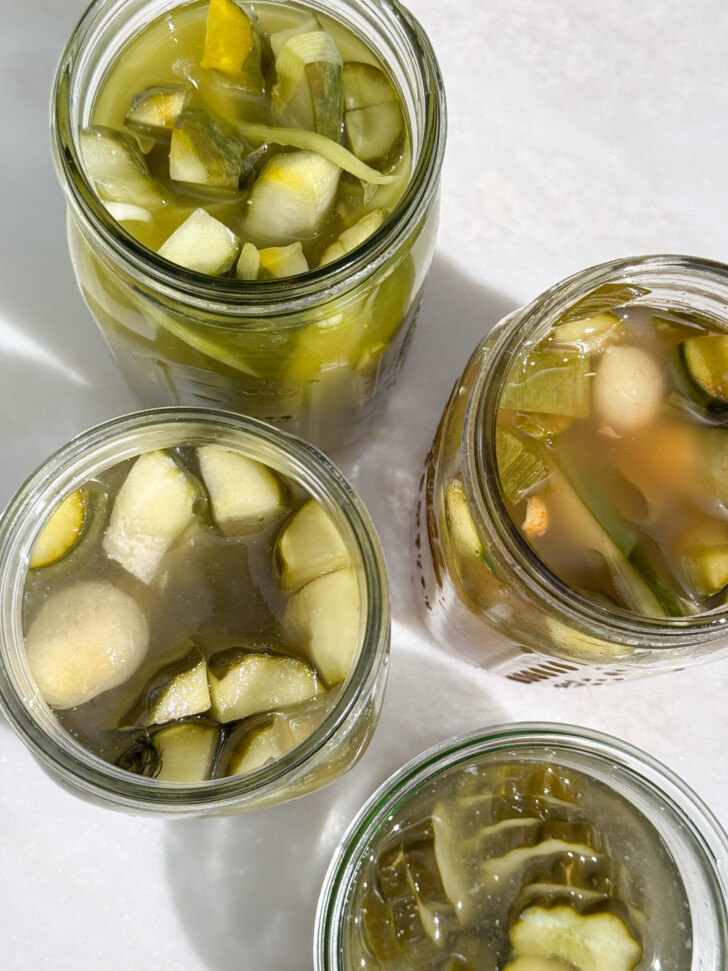
- Look at the brine. Fermented brine is usually a little cloudy. Crystal-clear brine is a sign of vinegar pickles.
Making them at home is the easiest and cheapest way to get the real thing.
Fermented Pickles vs. Vinegar Pickles
| Fermented Pickles | Vinegar Pickles | |
| How they’re made | Cucumbers in salt brine, soured by lactic acid bacteria | Cucumbers in a vinegar brine, often pasteurized |
| Live probiotics | Yes | No |
| Flavor | Tangy, garlicky, complex | Sharp, vinegary |
| Brine | Cloudy | Clear |
| Time to make | 5-14 days | Hours |
| Storage | Refrigerator | Pantry until opened |
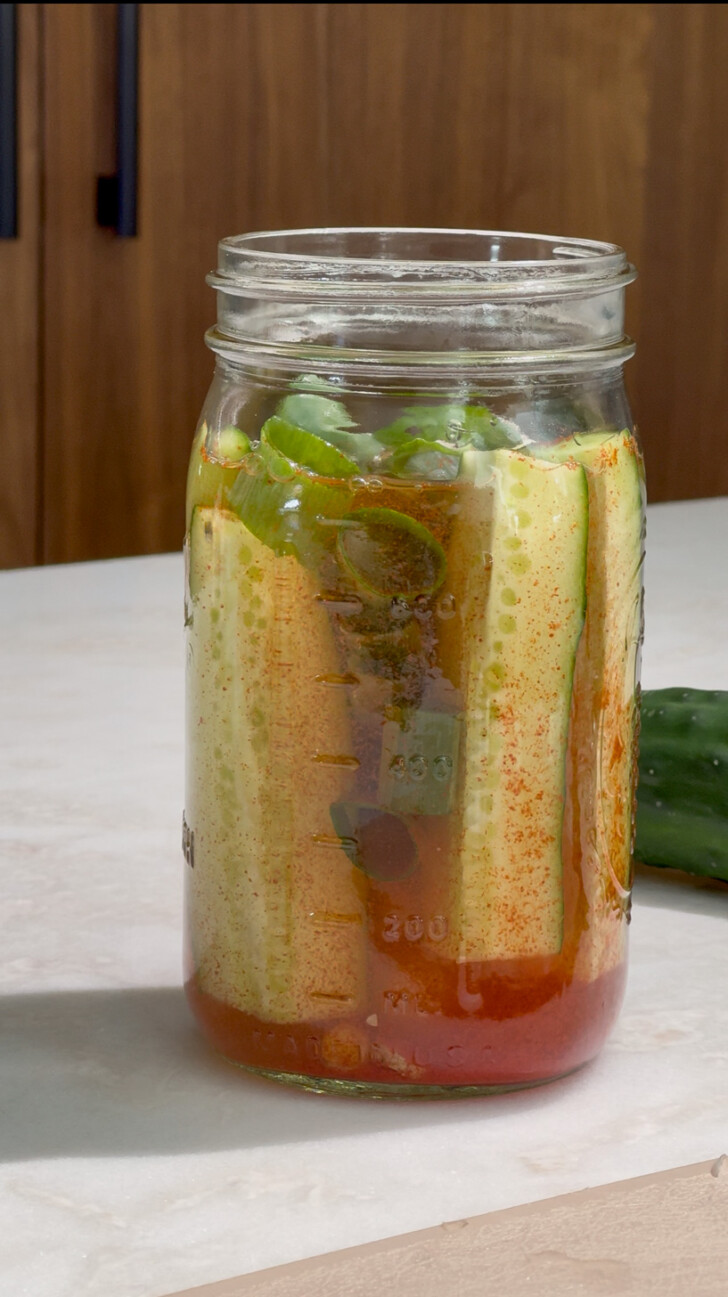
What You’ll Need
The Best Cucumbers for Pickling
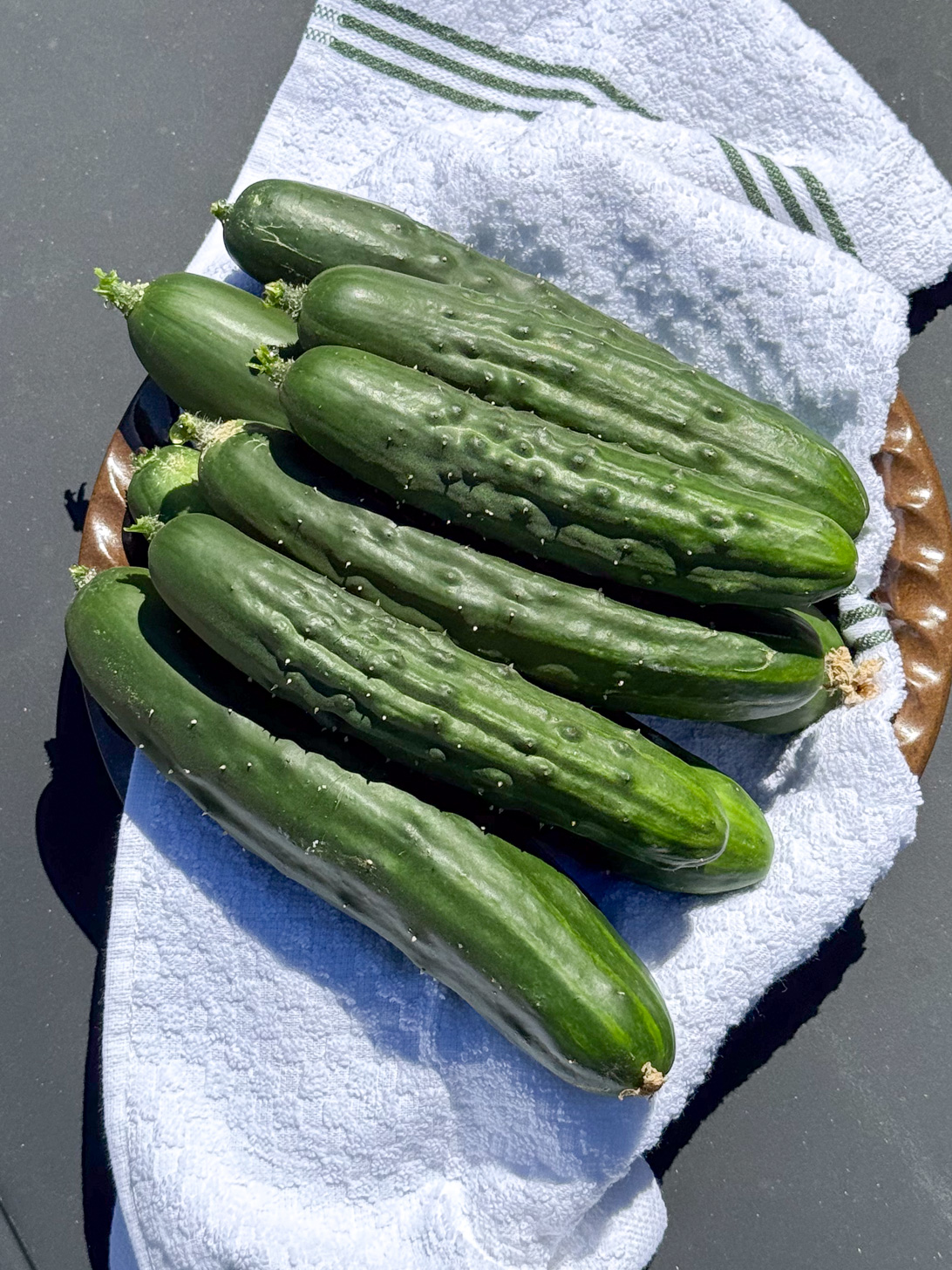
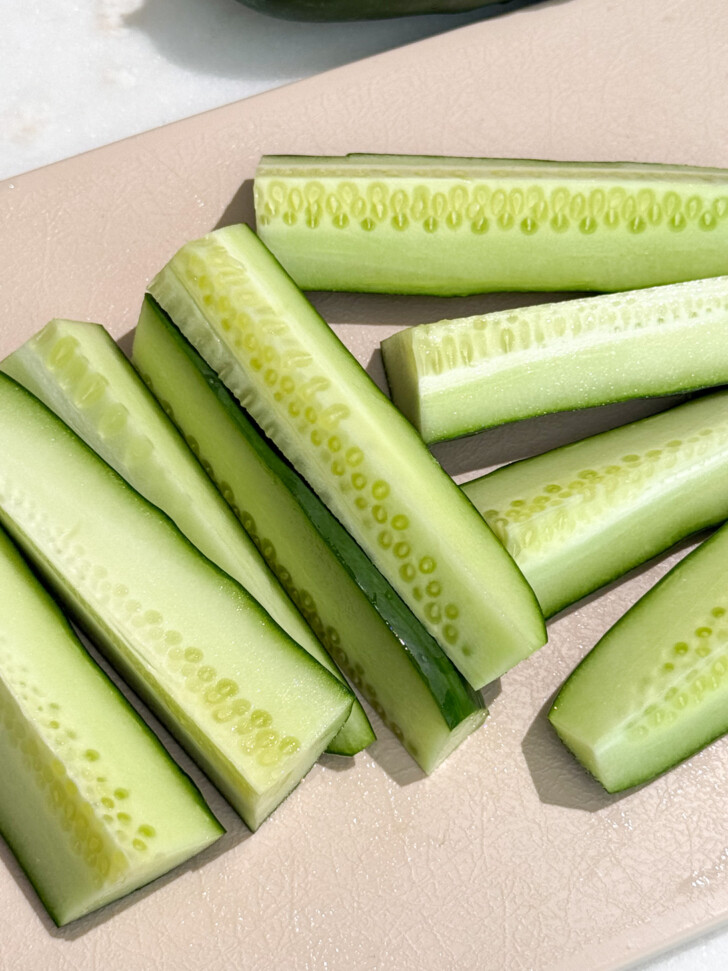
Pickling cucumbers are the best choice for fermented pickles. Kirby is the most common variety. They’re short (3 to 5 inches) with thin, bumpy skin, small seeds, and dense flesh that stays crunchy in brine.
Other cucumbers work too. I grow English cucumbers and they make great spears. Persian cucumbers also work well. Slicing cucumbers with thick waxy skin are the hardest to keep crunchy.
A few tips for picking cucumbers:
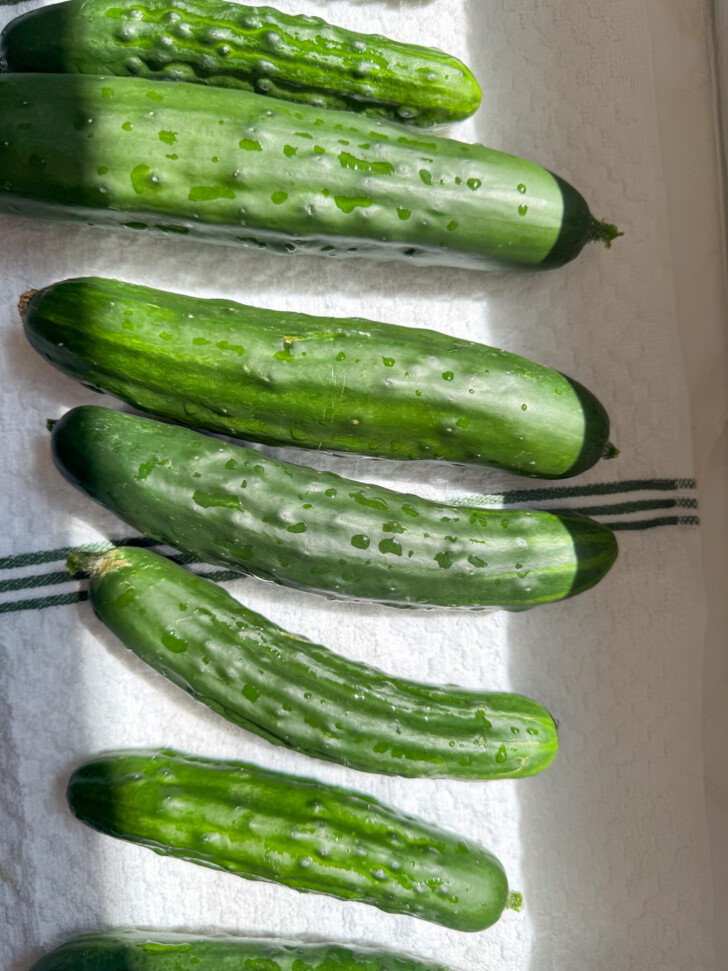
- Fresher is crunchier. Ferment within a day or two of picking or buying.
- Choose firm ones. Skip any with soft spots or wrinkled ends.
- Avoid waxed cucumbers. Wax blocks the brine. If they feel slick, choose a different batch.
- Match the sizes. Similar-sized pieces ferment at the same rate.
Salt
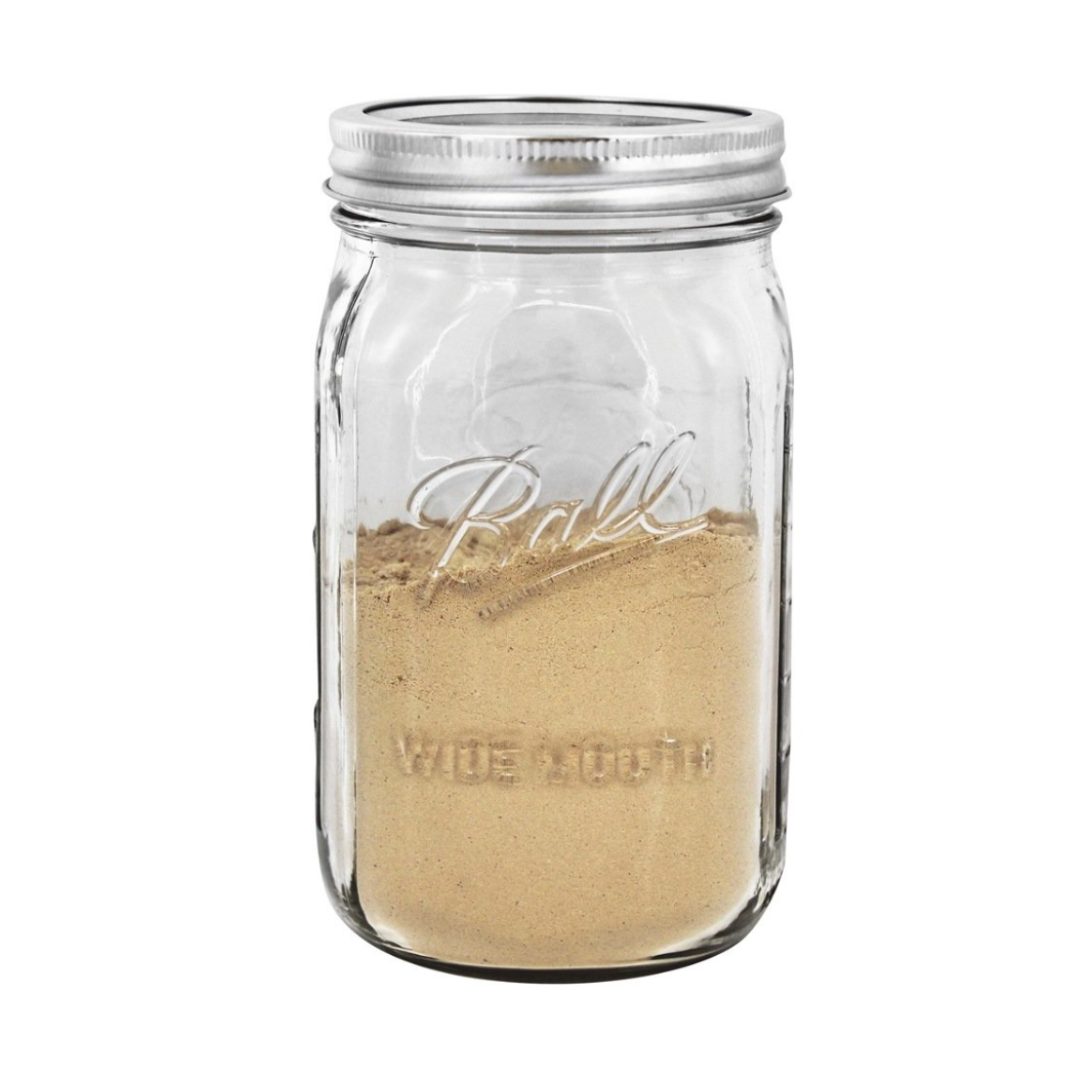
Use fine sea salt, pickling salt, or kosher salt without additives. Avoid iodized table salt and anything with anti-caking agents, which can cloud the brine and slow fermentation.
Water
Use filtered water. Chlorine in tap water can slow down or stop fermentation. If you only have tap water, leave it out uncovered overnight or boil and cool it first.
Equipment
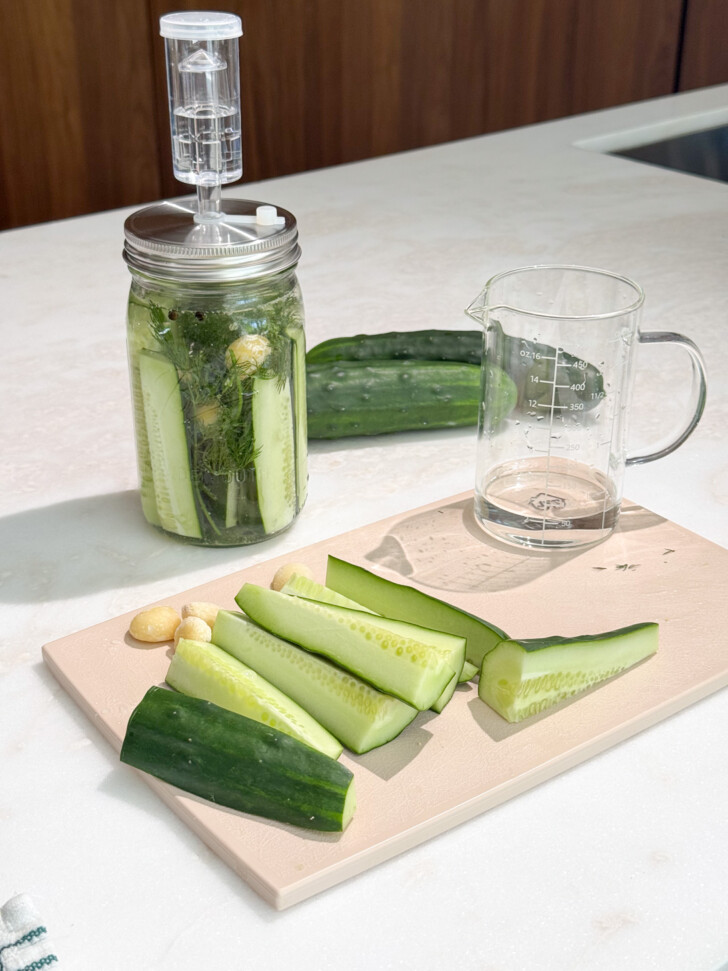
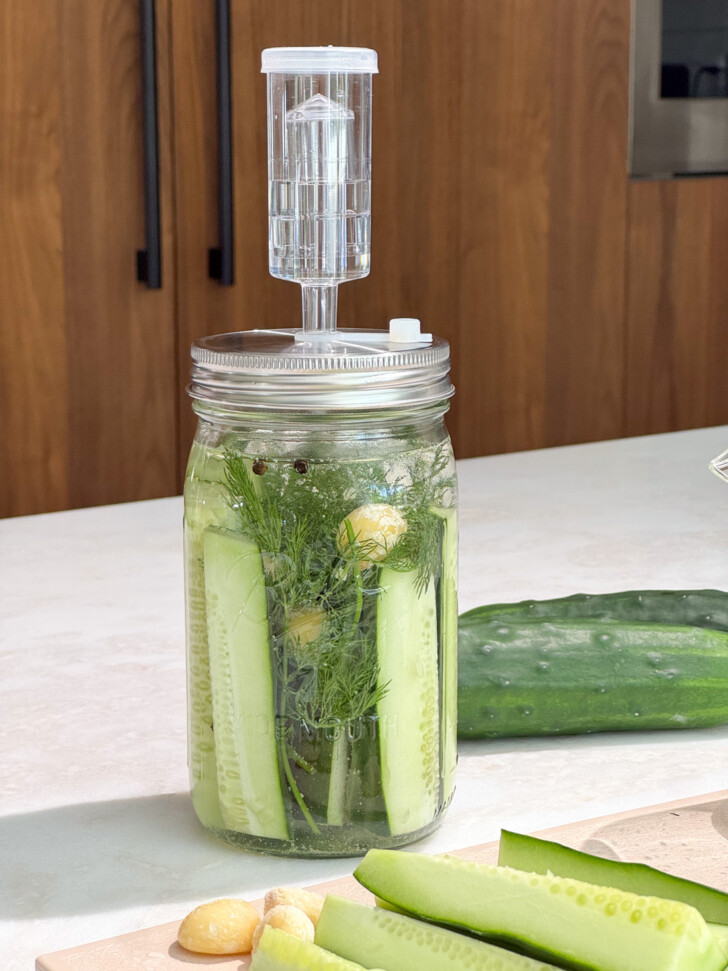
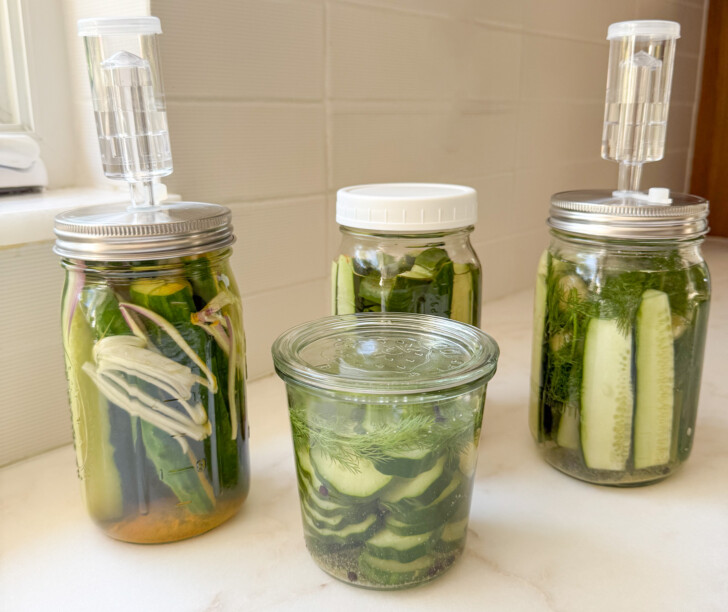
- A wide-mouth 32 oz mason jar. Fits one large cucumber cut into spears.
- A fermentation weight. Keeps everything under the brine, which prevents mold.
- An airlock lid. Lets gas escape without letting air in, so you don’t have to burp the jar. A regular lid left loose also works.
- A kitchen scale. For measuring salt accurately.

Flavor Variations
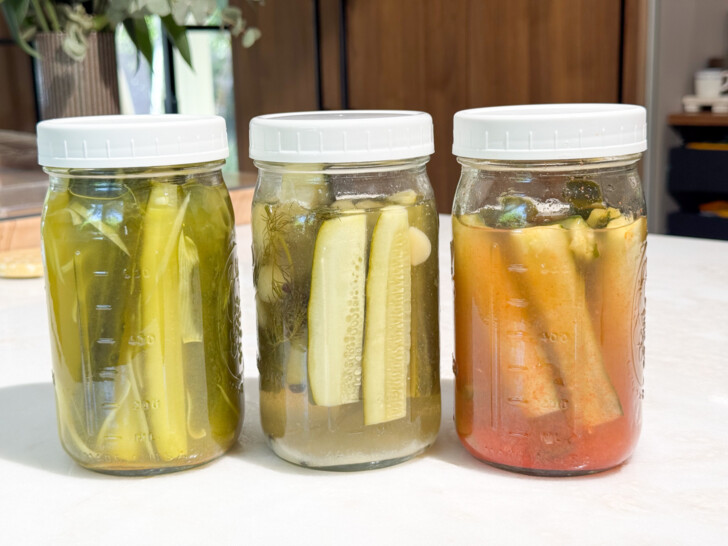
The base recipe is just cucumbers and 3% brine. Add one of these to the jar before the cucumbers (amounts are for a 32 oz jar):
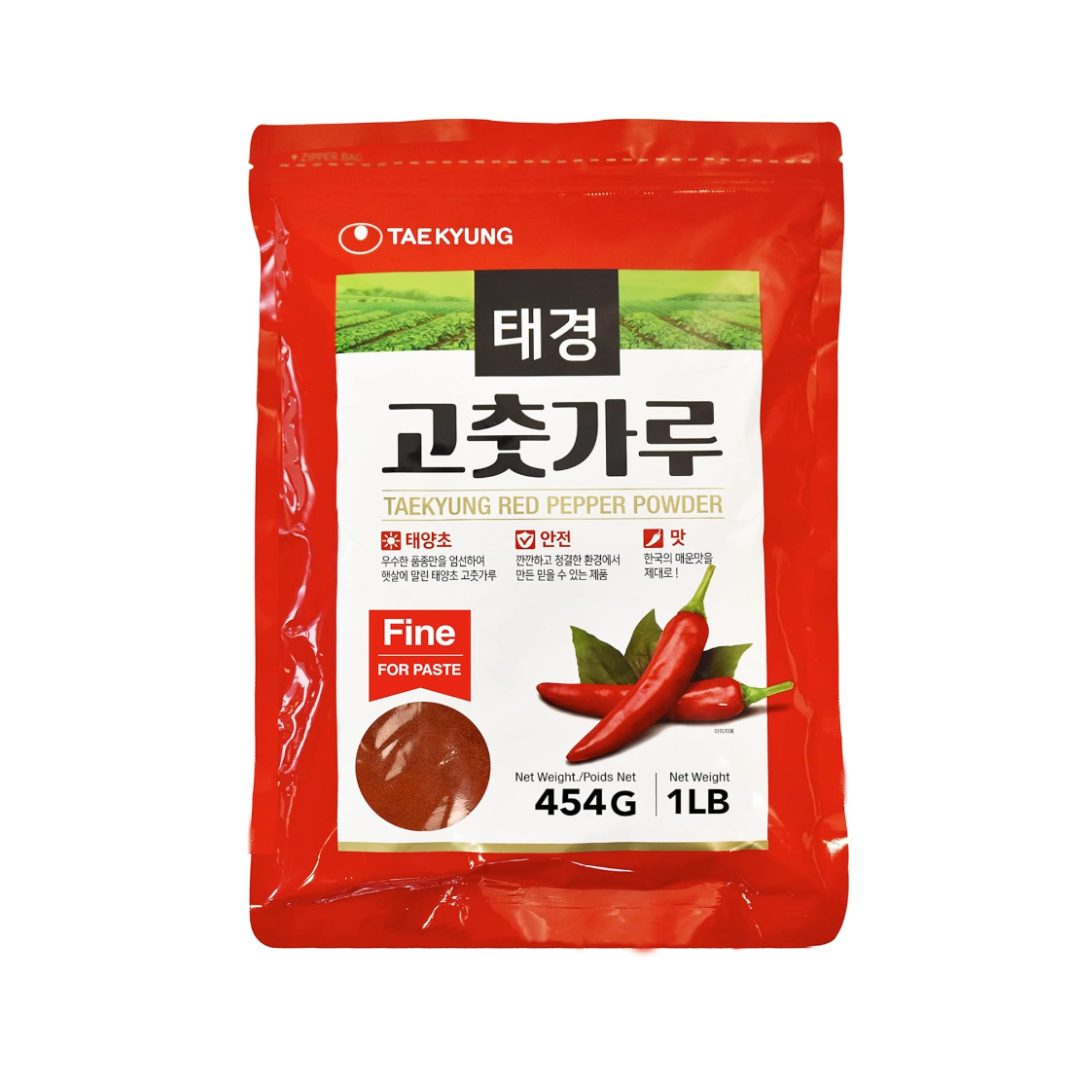
- Kimchi Style: 1 tsp gochugaru (Korean chili flakes), 3 garlic cloves, 1 chopped green onion, and 1 to 2 tsp chopped fresh ginger.
- Classic Garlic Dill: A big handful of fresh dill, 3 to 5 garlic cloves, 1/4 tsp black peppercorns, 1/2 tsp mustard seeds, and 1 bay leaf.
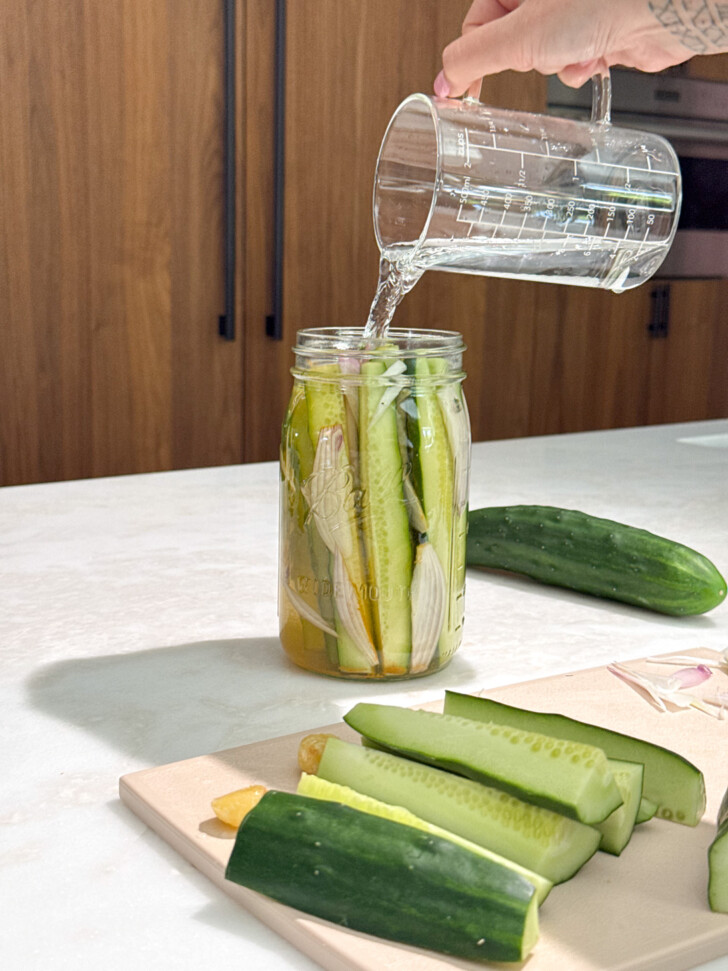
- Sweet & Tangy: 1 thinly sliced shallot, 1/2 tsp turmeric, and 3 garlic cloves.
Troubleshooting Fermented Pickles
Most things that look strange in a fermenting jar are normal. Here’s how to tell the difference.
| What you see | Is it okay? |
| Cloudy brine, white sediment, bubbles, overflow, or olive-green cucumbers | Yes, all normal |
| Flat white film on the surface | Usually harmless (kahm yeast) |
| Fuzzy, raised spots, or blue, green, black, or pink growth | No, mold |
| Rotten or putrid smell | No |
| Slimy pickles | No |
| Soft or mushy pickles | Safe if it smells good |
| Hollow centers | Safe |
| No bubbles after 3 to 4 days | Usually fine |
The Brine: Salt-to-Water Ratio
This recipe uses a 3% brine: 30 grams of salt for every liter of water. That’s enough salt to keep harmful bacteria out while letting the good lactic acid bacteria thrive.
Too little salt and the pickles can spoil or turn mushy. Too much and fermentation slows down and the pickles taste harsh. 3% is a reliable middle ground, and the brine is mild enough to drink.
Weigh your salt if you can. Teaspoon measurements vary a lot between brands (a teaspoon of flaky kosher salt weighs about half as much as fine sea salt).
| Jar Size | Water | Sea Salt (grams) |
| 16 oz (pint) | 400 ml | 12 g |
| 32 oz (quart) | 800 ml | 24 g |
| 64 oz (half gallon) | 1.6 liters | 48 g |
How to Enjoy Fermented Pickles
- Straight from the jar as a crunchy, probiotic snack.
- On sandwiches and burgers for a tangy crunch.
- Chopped into salads like potato salad, coleslaw, or [link your Japanese cucumber salad if it fits].
- On a snack board with hummus, crackers, and olives. [Link your edamame hummus post when it’s live.]
If you’re into gut-friendly recipes, try my GINGER SHOTS and SOURDOUGH DISCARD PANCAKES.
Frequently Asked Questions
Can I make pickles without vinegar?
Yes. Lacto-fermented pickles get their sour flavor from lactic acid made by bacteria in a salt brine, so no vinegar is needed. Quick pickles use vinegar instead, but they don’t have live probiotics.
How long do fermented pickles last?
In the fridge, they keep for about 4 to 6 months [adjust to your experience] as long as they stay submerged in brine. They’ll slowly get tangier and softer over time. Toss them if they smell rotten or grow mold.
Do fermented pickles need to be refrigerated?
Yes, once they’re done fermenting. Cold temperatures slow fermentation so the pickles don’t get too sour or soft. They aren’t shelf stable like canned pickles.
Do I need a special fermenting lid?
Yes, I highly recommend using an airlock. Simply attach it to the mouth of your jar, and let the fermentation process happen naturally. You can use a regular lid and lift it once a day to release gas, but I find that can allow for bacteria to get in. It is so worth it to get a FERMENTATION KIT so you have everything you need!
Can I make low-sodium fermented pickles?
Only to a point. Salt is what keeps harmful bacteria out, so going much below a 2% brine isn’t safe. To cut sodium on your plate, rinse the pickles before eating and stick to a spear or two.
Can I reuse the brine?
Yes. Add a few tablespoons of brine from a finished batch to a new jar to speed up fermentation. Don’t reuse the full brine on its own for a new batch, since it will be too acidic and weak in salt. Use it in dressings or drink a small shot instead.
{If you like this recipe you’ll love my ANTI-INFLAMMATORY LENTIL SOUP and my EDAMAME AVOCADO SPREAD.}
Fermented Pickles
Ingredients
- 1 Large Cucumber, sliced into spears or rounds, Rounds will require either 2-3 pickles OR a smaller jar. If using a smaller jar, reduce the amount of salt by about half
- 3-4 tsp Sea Salt, Add 4 tsp of salt if you want a super briney and tangy result
- Filtered Water, Enough to submerge the pickles, about 800ml if using a 32oz jar
- Mix-ins of choice, See blog post for ideas
Instructions
Prepare the Cucumbers
- Wash and cut cucumbers into spears.
Pack the Jar
- Place cucumber spears into your mason jar. I use a wide mouth 32oz mason jar which fits 1 cucumber sliced into tall spears. If you are using a smaller jar which holds less water, reduce the amount of salt by about half. For example, 800ml water = 3-4 tsp salt, 400ml water = 1.5 – 2 tsp salt)
Add Seasonings
- Add in mix-ins of choice – see blog post for ideas.
Cover with Water
- Pour filtered water into the jar, ensuring the cucumbers are completely submerged. For a 32oz jar, I use about 800ml of water. I recommend using a weight to keep all of the ingredients pressed down so they ferment evenly. Find the one I use linked in the blog post.
Ferment at Room Temperature
- Secure with an airlock lid and leave at room temperature for about 2 weeks. If you don't have an airlock lid, just add a regular lid but don't tighten it. Remove the lid once a day to release pressure. You can stop the fermentation process after a week, but in my opinion they’re not tangy enough. I recommend 14 days, but don’t be afraid to give them a taste throughout the process to see where you’re at.
Store in the Fridge
- Once fermentation is complete, replace the airlock lid with a normal lid and refrigerate. Pickles can last up to 1 year!
Can you use any kind of cucumber?
Yes you can! I grow english cucumbers so always use those but you can get creative with it
such great variations!