
How to Make Vegan Locro de Zapallo – Peruvian Comfort Food
Vegan Locro de Zapallo (Peruvian Squash Stew)
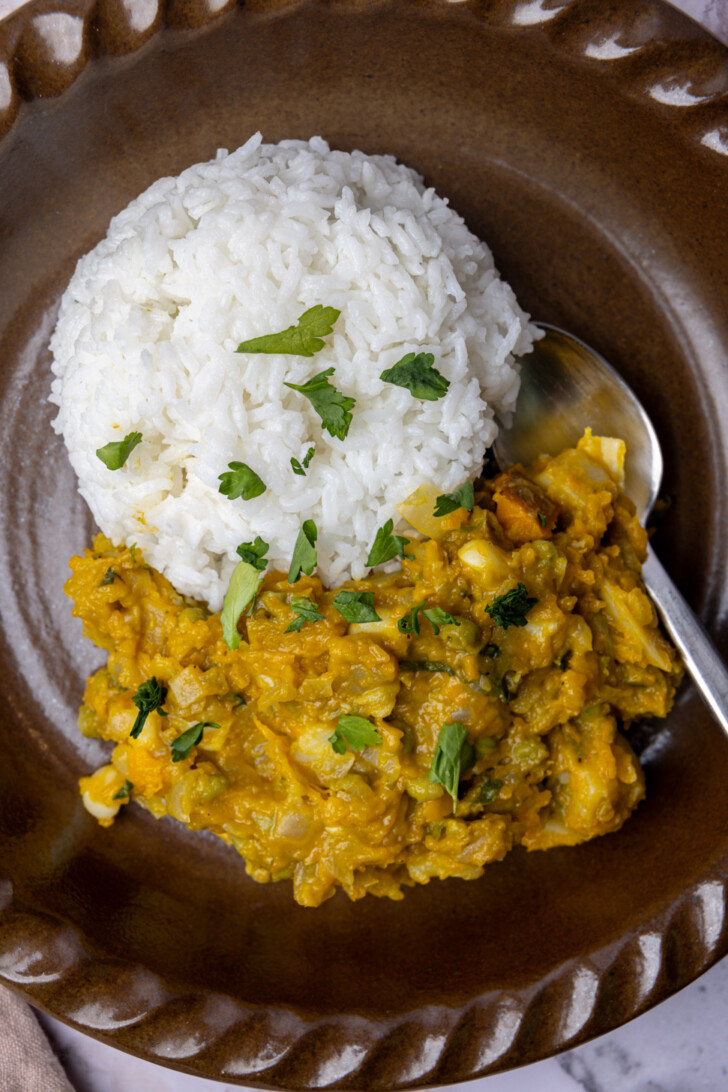
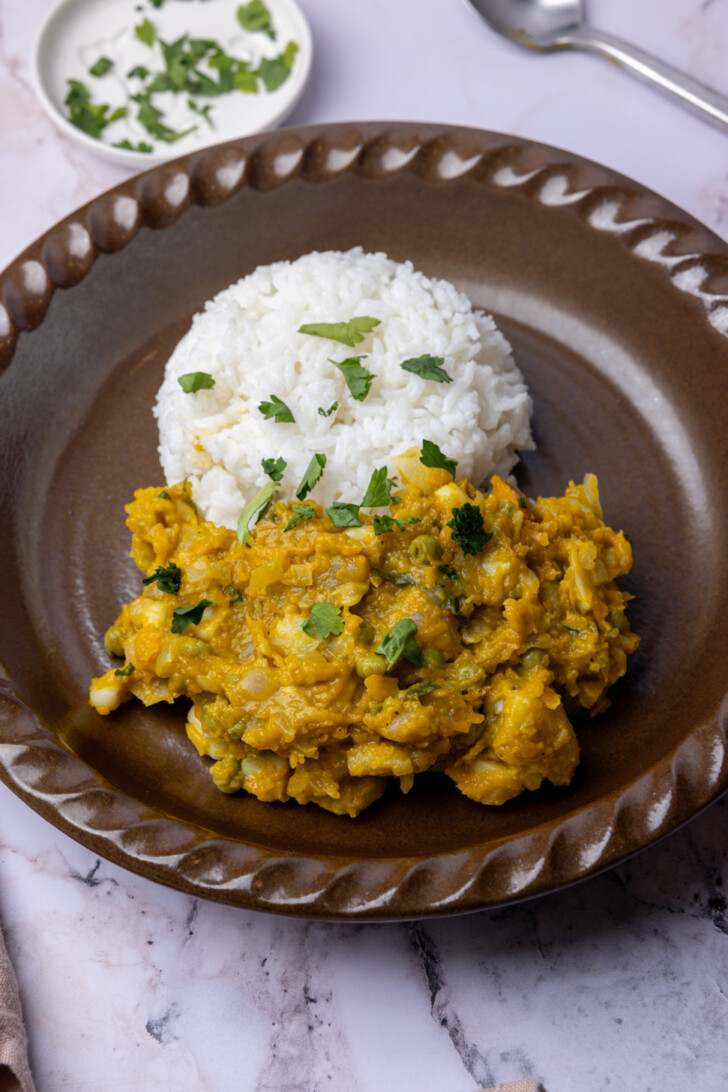
Locro de zapallo is a thick, creamy Peruvian squash stew made with zapallo (squash), potatoes, choclo (Peruvian corn) and ají amarillo, usually served over white rice. Traditional versions finish the pot with milk and queso fresco. In this vegan version, the squash and potatoes do all the work: you simmer them until soft, mash half the pot, and it turns velvety on its own.
It’s one pot, about an hour start to finish, and one of the easiest recipes on the blog. Make it on a cool fall night and you’ll have lunches for days.
How to Make Locro de Zapallo (Video)
What Is Locro de Zapallo?
Locro is a family of Andean stews. The word comes from the Quechua ruqru, and nearly every country along the Andes has its own take. Peruvian locro de zapallo is squash-forward: zapallo cooked down with potatoes until it’s thick enough to eat with a fork, seasoned with an aderezo of onion, garlic, ají amarillo and often huacatay.
Peruvian Locro vs. Argentine Locro
If you’ve had locro in Argentina, this will look different. Argentine locro is built on dried white corn and beans, usually cooked with several cuts of pork and beef, and it’s traditionally eaten on May 25th, a national holiday. Peruvian locro is lighter, quicker and centered on squash, which is why it’s so easy to make vegan.

What is Zapallo
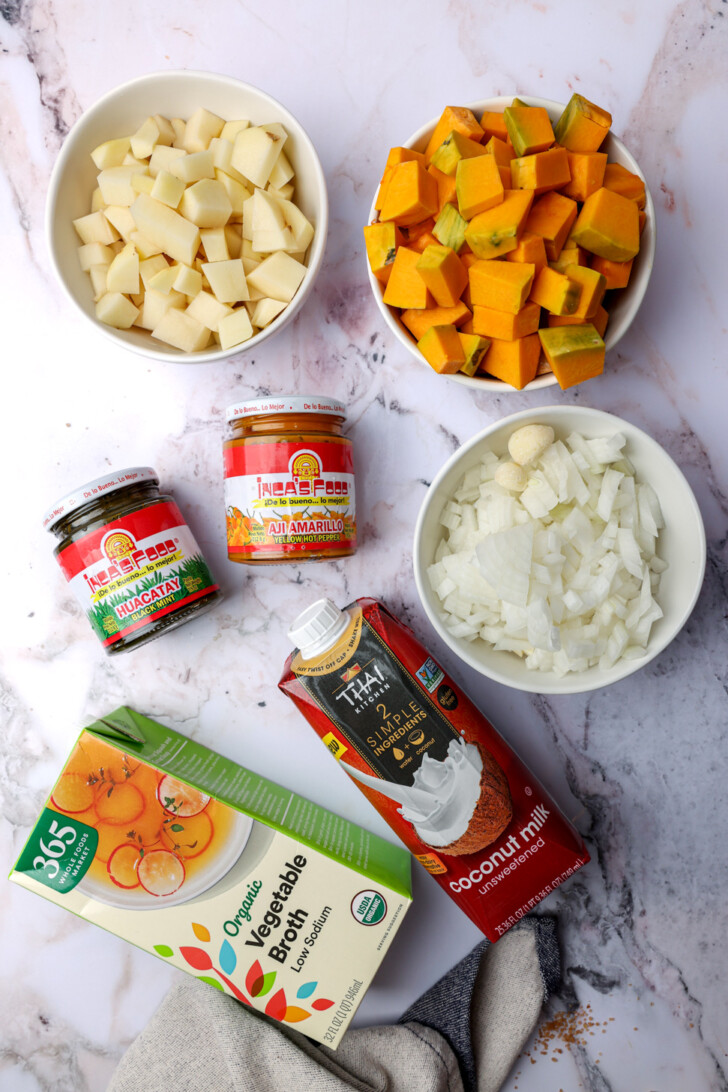
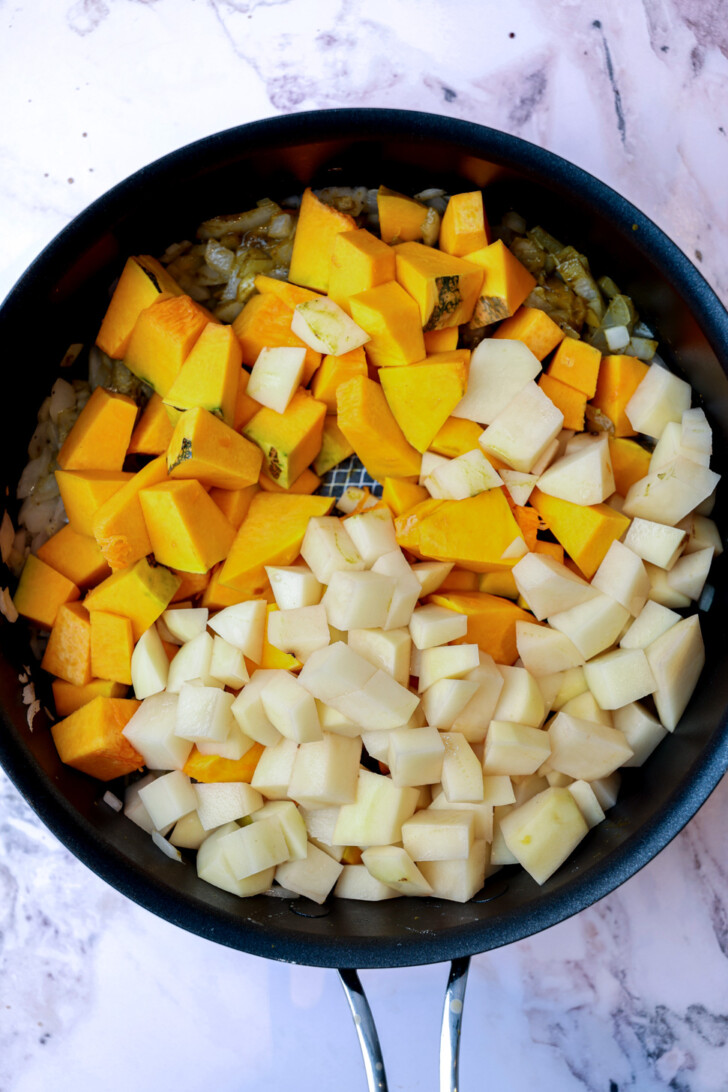
Zapallo is the South American Spanish word for squash or pumpkin. In Peru, the classic choice is zapallo macre, a huge squash with dense, deep orange flesh, sold by the wedge at markets. Outside Peru it’s hard to find, so use one of these:
- Calabaza (my pick): also called West Indian pumpkin. It’s the closest match and easy to find in Latin and Caribbean grocery stores.
- Kabocha: dense and sweet, breaks down beautifully.
- Butternut squash: sold everywhere, slightly sweeter.
- Pie pumpkin: works, a bit more watery.
Avoid spaghetti squash. It won’t break down into a creamy stew.

What to Serve with Locro de Zapallo
In Peru, locro is almost always served with white rice on the side or underneath. A simple salad of sliced red onion, lime and salt (a quick salsa criolla) cuts through the richness. If you eat eggs, a fried egg on top is a common Peruvian way to serve it.
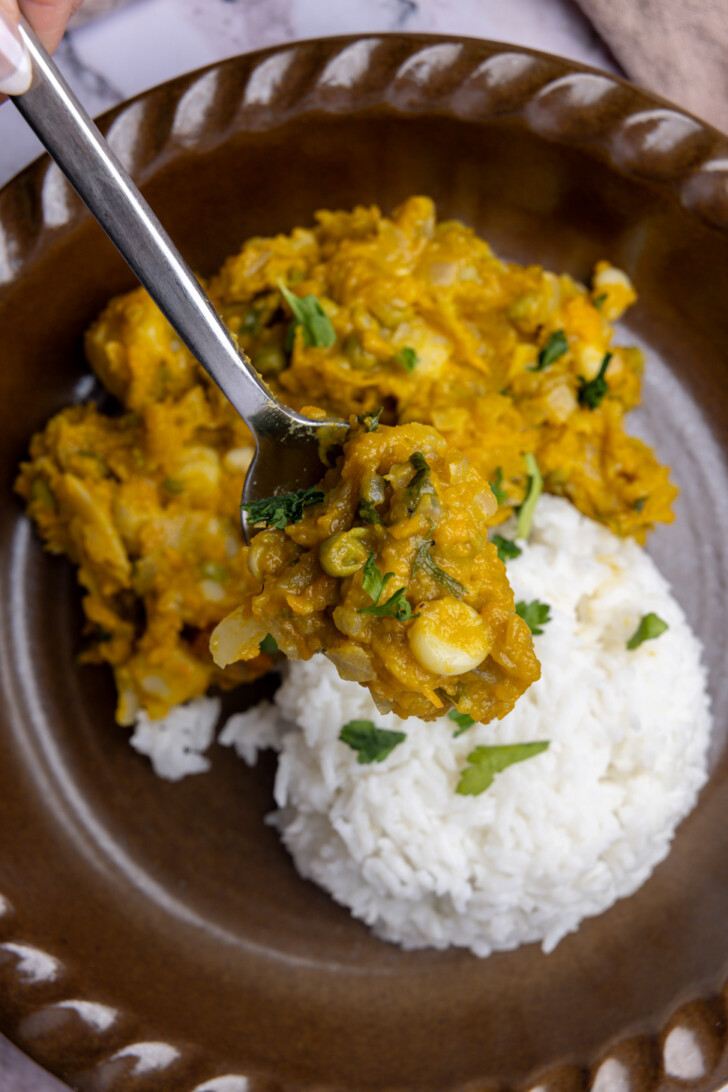
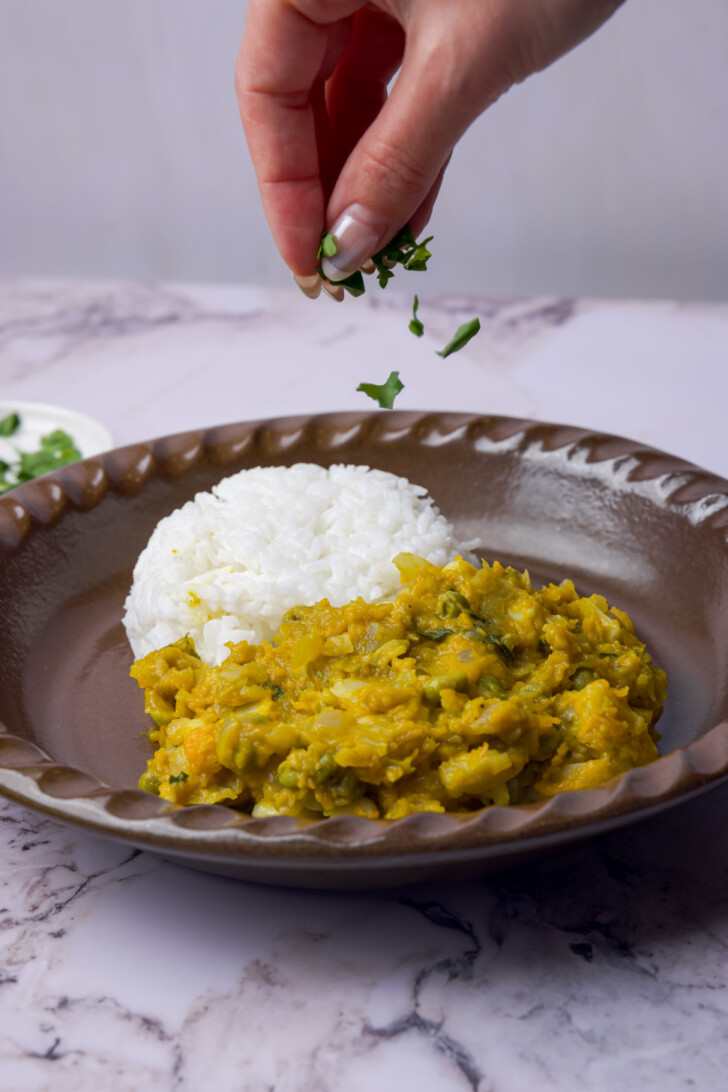
Ingredients You’ll Need
- Squash: calabaza or one of the swaps above.
- Yellow potatoes: Yukon Gold is the closest thing to Peru’s papa amarilla. They break down and thicken the stew.
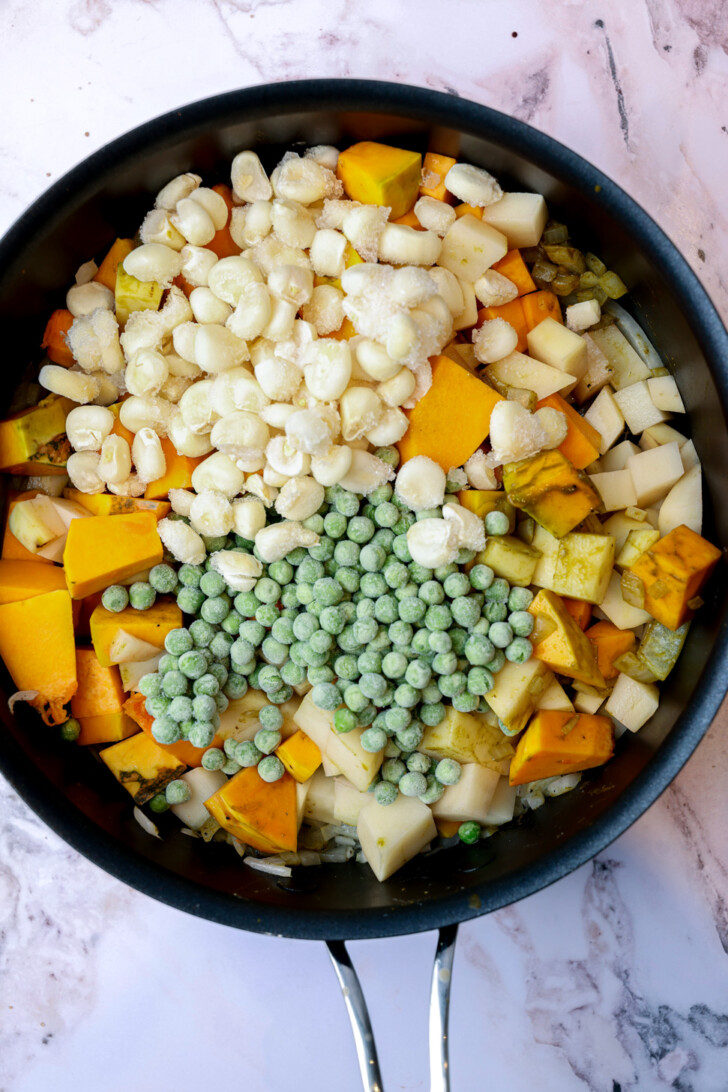
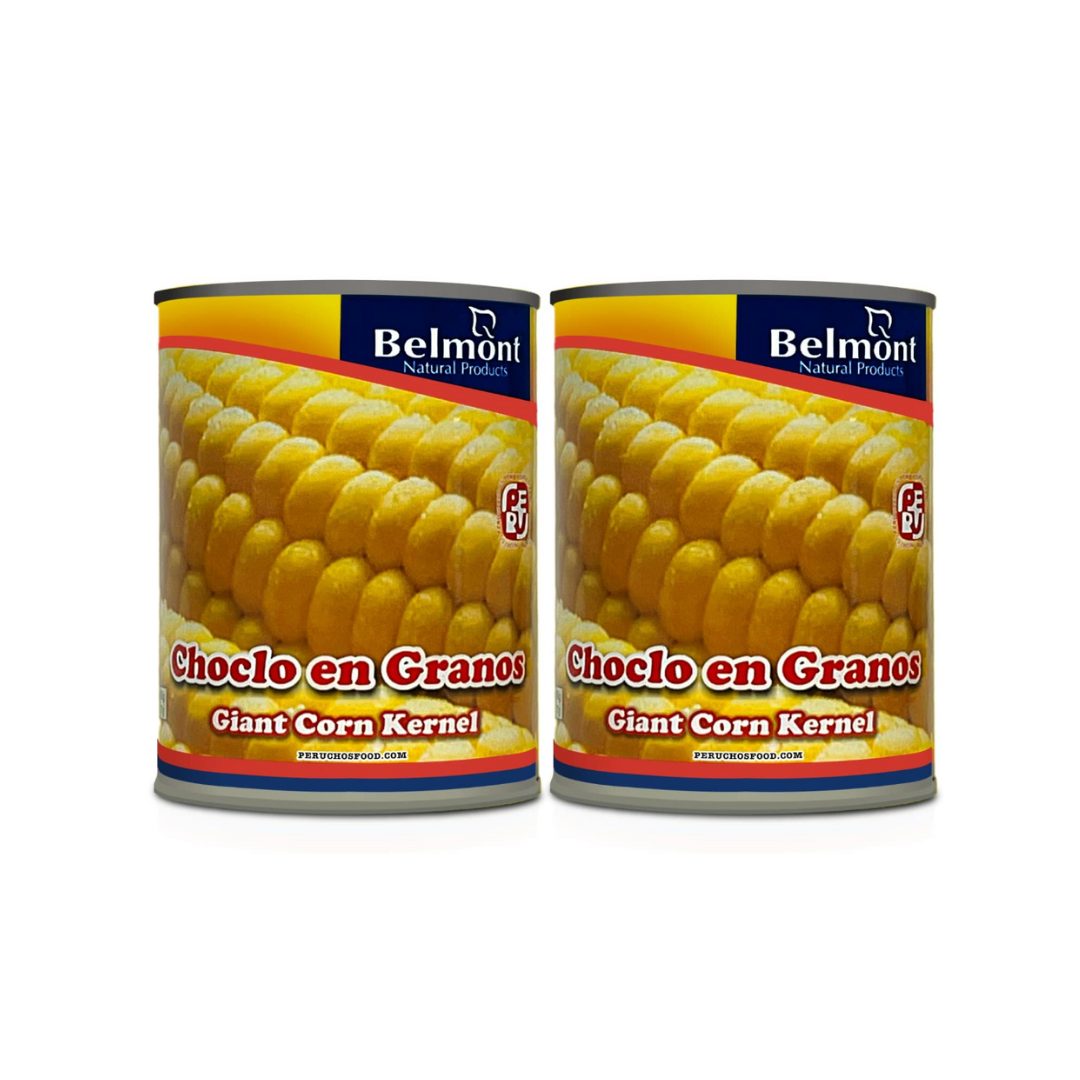
- Choclo: large-kernel Peruvian corn, sold frozen in Latin grocery stores. Regular sweet corn works.
- Peas: frozen are fine.
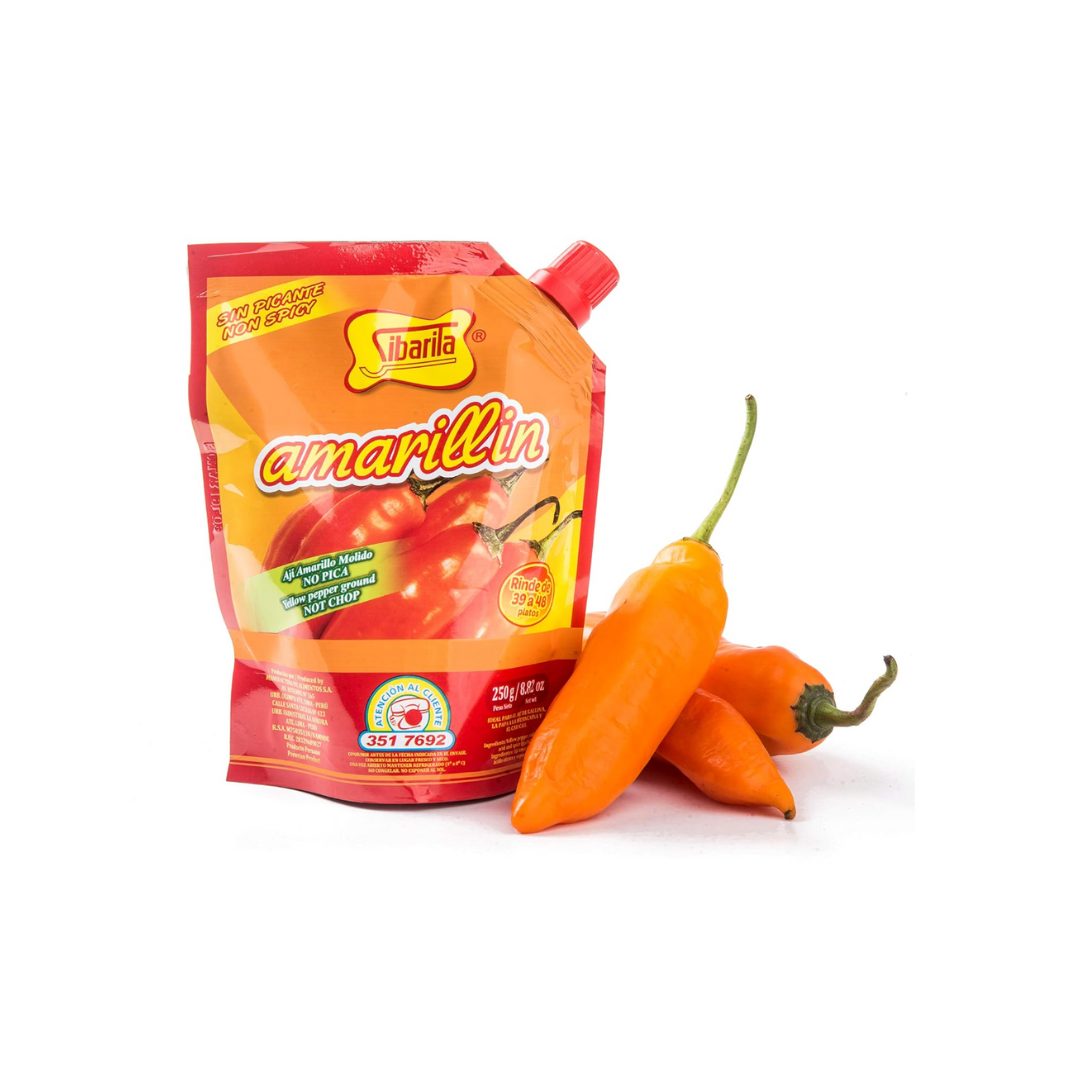
- Ají amarillo paste: the bright, fruity Peruvian yellow chili that gives locro its color and flavor. There are spicy and non-spicy versions.
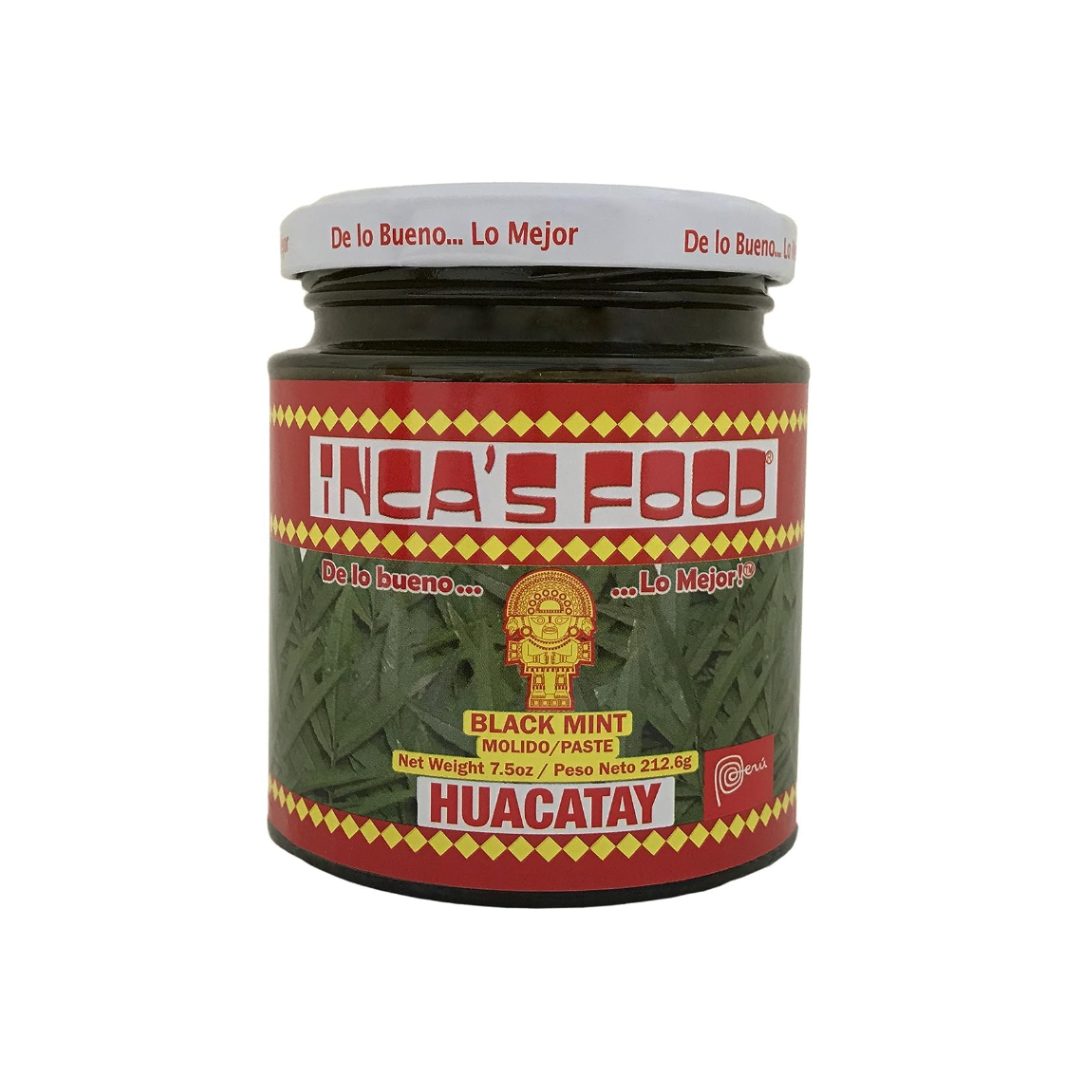
- Huacatay paste: Peruvian black mint. Herbal, a little minty, very distinctive.
- Onion, garlic and dried oregano for the aderezo (the flavor base).
- Vegetable broth, salt, pepper and fresh cilantro.
Can I Skip the Ají Amarillo or Huacatay?
You can, and the stew will still be cozy and good. Just know ají amarillo is the backbone of locro’s flavor. If spice is the worry, use the non-spicy version rather than leaving it out. Huacatay is easier to skip; a handful of extra cilantro and mint at the end gives a similar fresh, herbal note.
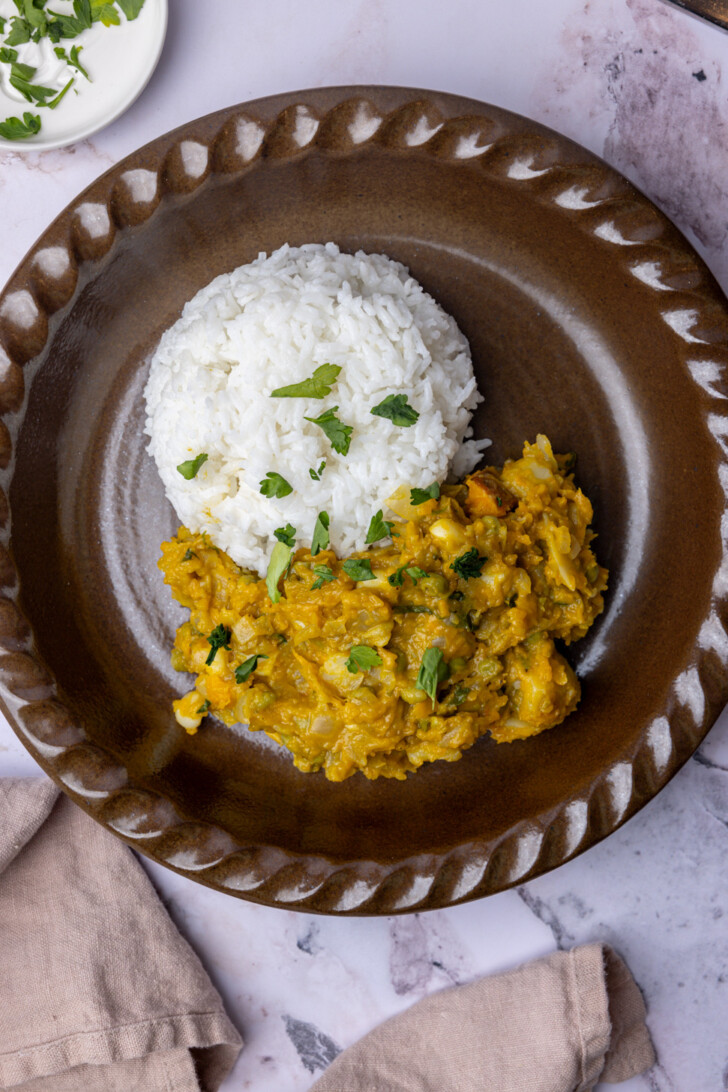
How to Make Locro Creamy Without Dairy or Coconut Milk
Traditional locro uses dairy and cheese, but I found in this plant based version it doesn’t need it. Here’s what I do instead:
- Cook the squash until it falls apart. Undercooked squash stays in cubes. Give it the full 25-30 minutes.
- Use yellow potatoes. Their starch thickens the broth naturally.
- Mash half the pot. A potato masher right in the pot is all you need. Leave some chunks for texture.
- Add liquid slowly. Locro should be thick, more stew than soup. Add broth a splash at a time only if it gets too stiff.
This is your recipe, so if you want to add queso fresco and dairy to keep it traditional, go for it!

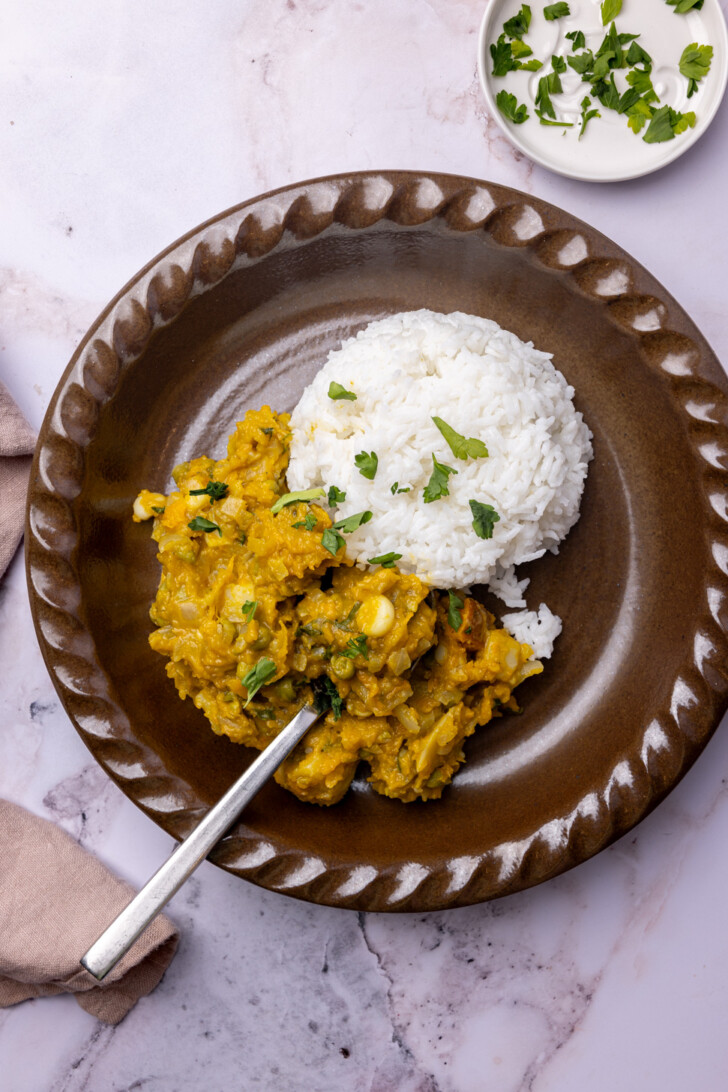
Why You’ll Love This Locro
- Calabaza squash is rich in beta-carotene (vitamin A) and vitamin C.
- Potatoes bring potassium and keep you full.
- Choclo and peas add fiber and a bit of plant protein.
- Ají amarillo and huacatay add big flavor with very little fat or salt.
- One pot, mostly hands-off, and it’s better the next day, so it’s great for meal prep.
Vegan Locro de Zapallo FAQ
Is locro de zapallo vegan? Traditional Peruvian locro de zapallo is vegetarian, but most recipes add milk and queso fresco. This version is fully vegan.
Can I use a different squash? Yes. Calabaza is closest to Peruvian zapallo macre, then kabocha and butternut. Avoid spaghetti squash.
Where do I find ají amarillo and huacatay paste? Latin American grocery stores or online. I use the Inca’s Food brand. [Link the non-spicy ají amarillo here.]
Is locro spicy? It depends on your paste. Regular ají amarillo paste has a moderate kick. Use the non-spicy version for kids or a mild pot.
Why is my locro watery? The squash probably isn’t cooked long enough, or there’s too much broth. Simmer uncovered for a few more minutes and mash more of the squash.
Can I make it ahead? Yes. It tastes even better the next day as the flavors settle in.
How to store and rehead Locro de Zapallo? Store leftovers in an airtight container in the fridge for up to 5 days. Reheat on the stovetop over low heat, adding a splash of water or broth, since it thickens as it sits. To freeze, cool the stew completely and freeze in individual portions for up to 3 months. Potatoes can turn a little grainy after freezing, so give it a good stir and a splash of broth when reheating.
{If you like this recipe, you’ll love my PAPA A LA HUANCAINA and my ACORN SQUASH TOMATO SOUP.}

Locro de Zapallo
Ingredients
- 2 tbsp Avocado Oil
- 1 White Onion, diced
- 2 Garlic Cloves, minced
- 1 tbsp Aji Amarillo Paste, I use a non-spicy version, I linked the one I use in the blog post
- 2 tbsp Huacatay Paste, I linked the one I use in the blog post
- 650 grams Squash, peeled and chopped, I recommend Calabaza as Zapallo can be trickier to find
- 2 Medium Yukon Gold Potatoes, peeled and cut into about 3/4 inch cubes
- 2 cups Vegetable Broth, plus more as needed
- 1 tsp Sea Salt, to taste
- ¼ tsp Black Pepper
- 1 cup Choclo, Large Peruvian corn usually found in the frozen section, feel free to swap with another type of corn
- 1 cup Peas, I use frozen peas
- Fresh Cilantro, chopped, topping
Instructions
- Prep: Peel and cube the squash and potatoes, dice the onion and mince the garlic. Calabaza can be tricky to peel; a little skin left on is fine.
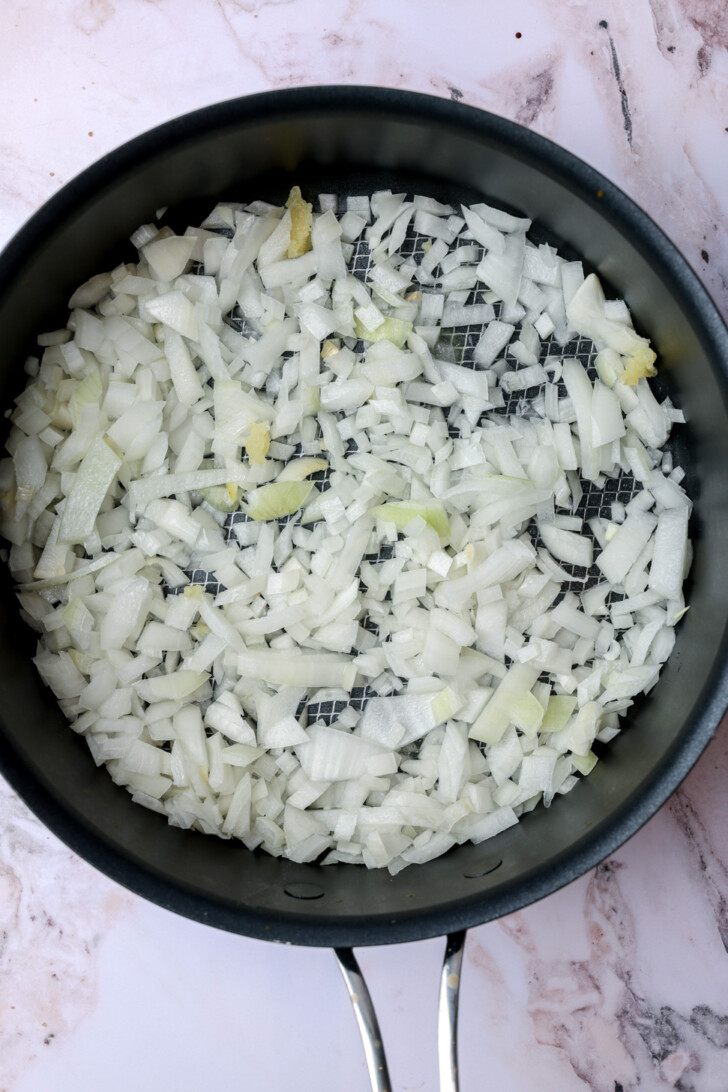
- Make the base: Warm the oil in a large pot over medium-low heat. Cook the onion for 6-7 minutes, stirring, until soft and translucent. Add the garlic and cook 1 minute. Stir in the ají amarillo, huacatay and oregano and cook 2 minutes, until fragrant and slightly darker.
- Simmer the vegetables: Add the squash, potatoes, 2 cups broth, salt and pepper. Bring to a boil, then cover and simmer on low for 25-30 minutes, until the squash is falling apart and the potatoes are very tender.
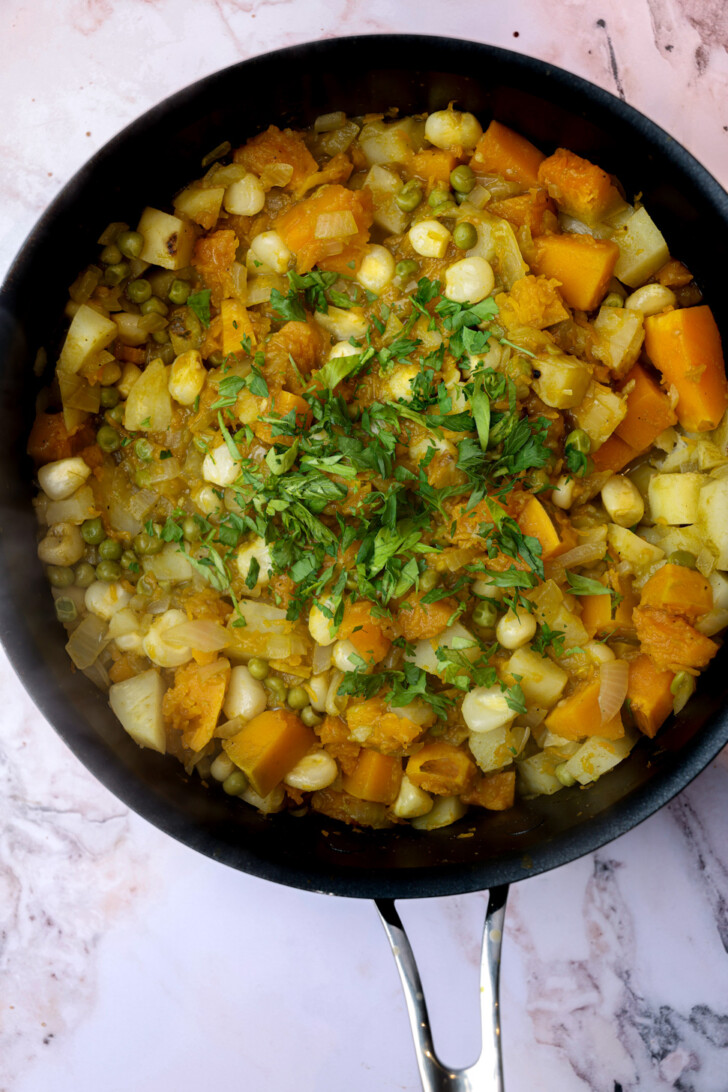
- Mash: Use a potato masher to mash about half the pot right in the pan. Leave some chunks. It should be thick and creamy, like a stew. If it's too stiff, add broth ¼ cup at a time.
- Add corn and peas: Stir in the choclo and peas and simmer uncovered for 8-10 minutes, stirring now and then so the bottom doesn't stick. Taste and adjust salt.
- Serve: Spoon over or beside white rice and top with cilantro.